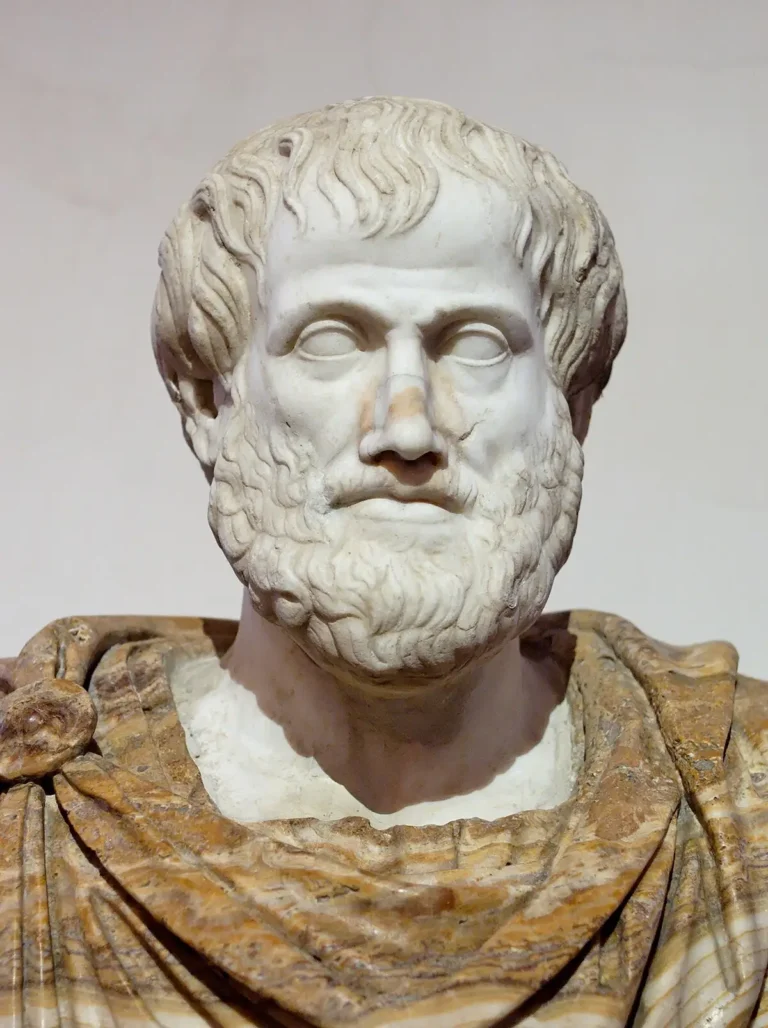
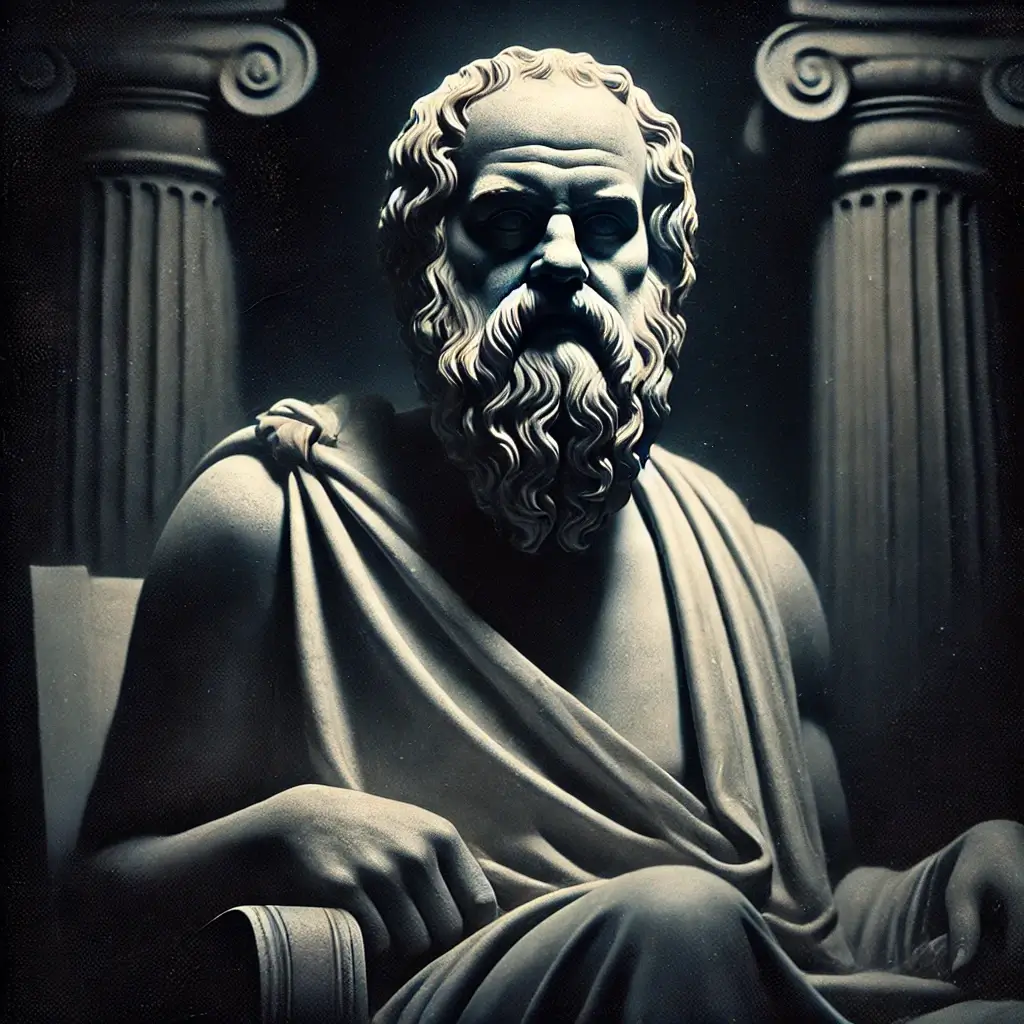
Socrates, an ancient Greek philosopher, is considered the founder of Western philosophy and one of the greatest intellectual figures in history. He was born in Athens around 470 BC and died in 399 BC. He is best known for his philosophy of dialogue and questioning to reach the truth. Socrates did not leave any written writings, but his ideas were transmitted through his disciples, most notably Plato.
Early life and early life
Birth and family:
- Socrates was born into a modest family in Athens. His father was a statuemaker, and his mother was a midwife.
- He received a simple education, but from a young age he showed a deep interest in thought and philosophical questions.
Personality and everyday life:
- Socrates lived a simple life, refusing wealth and material appearances. He spent his time in public markets discussing people and exchanging ideas.
Military service:
- He participated in the Peloponnesian Wars as an Athenian soldier, and was known for his bravery and endurance of hardship.
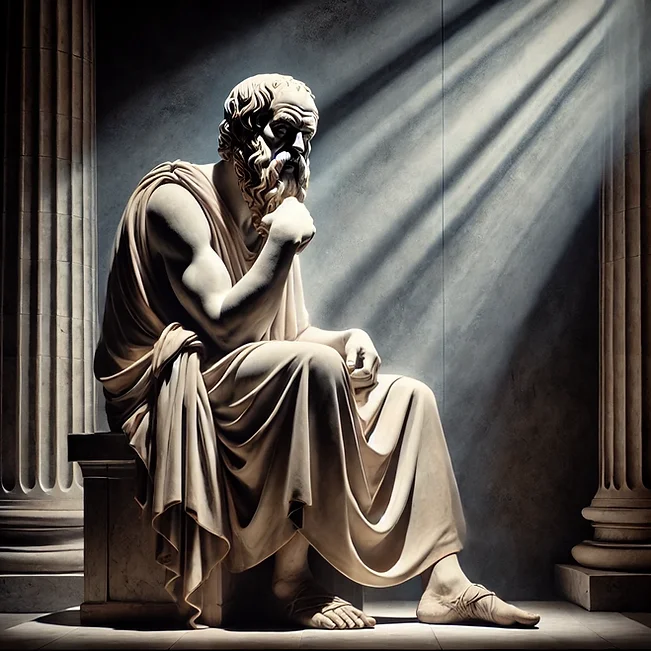
Philosophy and ideas
1. Knowledge and ignorance:
- Socrates said, “I know I know nothing.” This statement expresses his intellectual humility, his view that the search for truth begins with the recognition of ignorance.
2. Socratic dialogue:
- Socrates used dialectic as a tool to explore ideas and deconstruct misconceptions.
- He posed profound questions to stimulate critical thinking among his interlocutors.
3. Virtue and Morality:
- He saw that virtue is knowledge, and that man who knows good cannot choose evil.
- He stressed the importance of ethics as the rule of human behavior.
4. Searching for the truth:
- He considered that truth can only be reached through questioning and critical thinking.
5. Rationality:
- Socrates advocated the use of reason as a tool for understanding the world and making decisions.
Ethics and values
1. Humility:
- Socrates rejected the claim of false knowledge, believing that the search for truth required intellectual humility.
2. Honesty:
- Socrates was committed to telling the truth regardless of the consequences.
3. Courage:
- He showed great courage in defending his ideas, even when he faced the death penalty.
4. Love to know:
- He saw that the search for wisdom and knowledge is the highest goal of man.
Important ideas in his philosophy
1. Definition of virtue:
- For Socrates, virtue is not just behavior, but a state of mind based on knowledge.
2. Justice:
- He focused on the importance of justice in organizing society, and considered it the basis of a happy life.
3. Happiness:
- I believe that happiness comes from a virtuous life, not from material possessions.
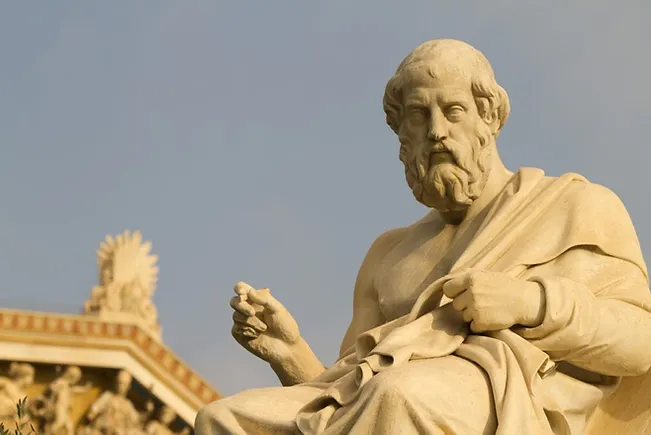
Impact and legacy
1. His disciples:
- Socrates’ ideas influenced great philosophers such as Plato and Aristotle, who developed his philosophy and transmitted it to the world.
2. Western philosophy:
- Socrates is considered the founder of Western philosophy with his emphasis on critical thinking and dialogue.
3. Ethics and Education:
- His philosophy contributed to the development of concepts of ethics and education based on critical thinking.
Trial and execution
- In 399 BC, Socrates was accused of corrupting the youth and denying the gods of Athens.
- During his trial, he refused to back down from his ideas or flatter the judges, and defended his right to question and seek the truth.
- He was sentenced to death, choosing to drink poison (hemlock) as a means of carrying out the sentence.
His last words:
- It is said that before his death he said, “Do not fear death; the soul is immortal.”
The bottom line
Socrates was a symbol of wisdom and moral courage. His philosophy of dialogue and critical thinking has inspired generations and left a profound impact on Western philosophy. His life and teachings represent an invitation to seek truth and live according to moral principles.