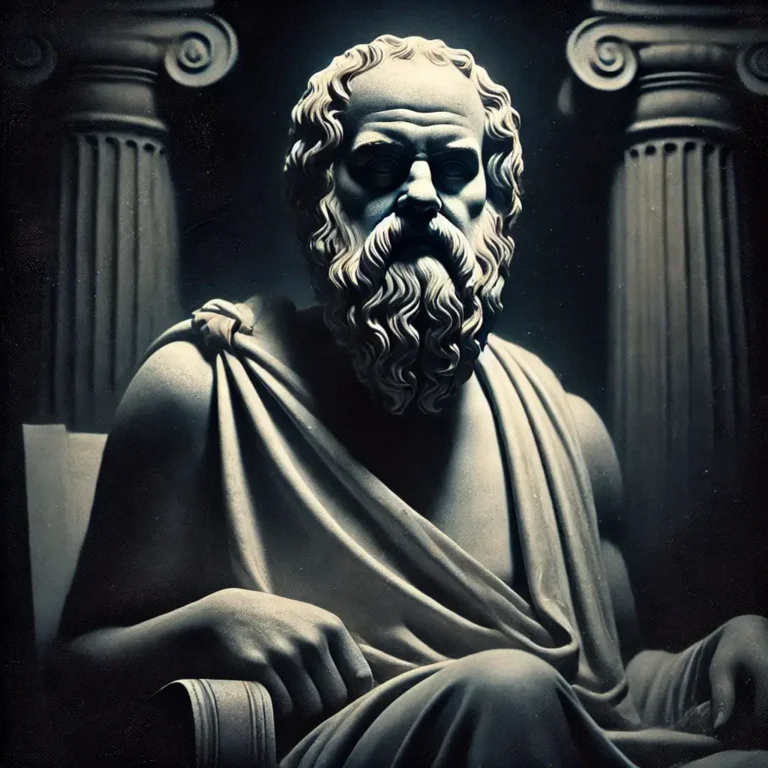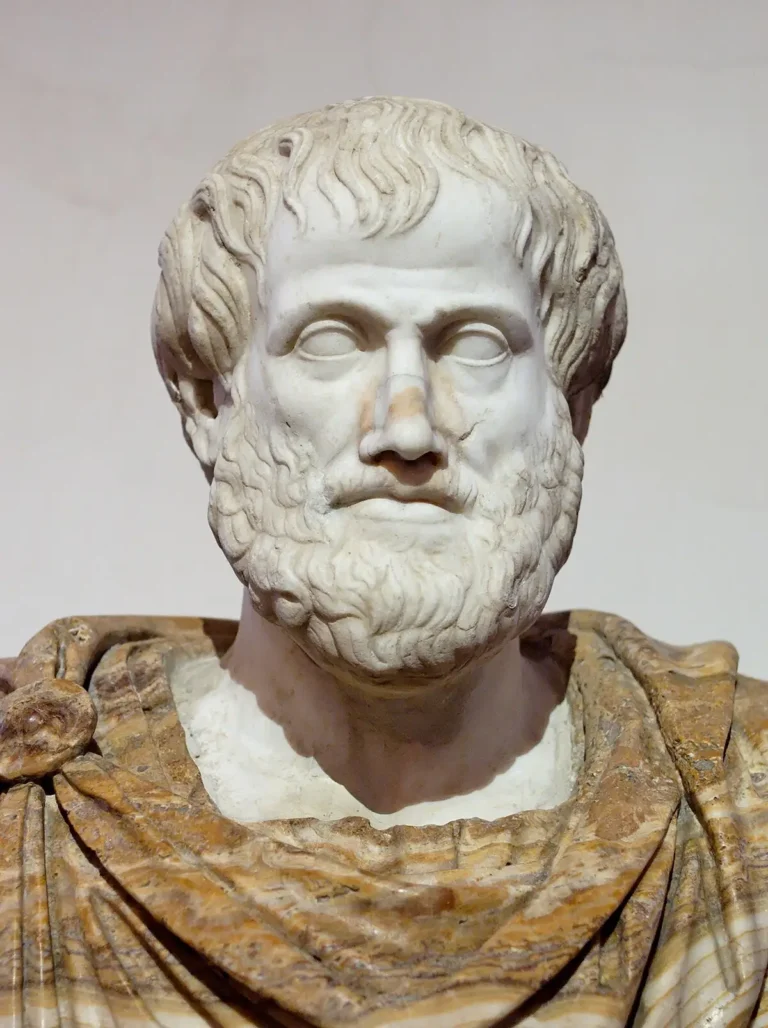
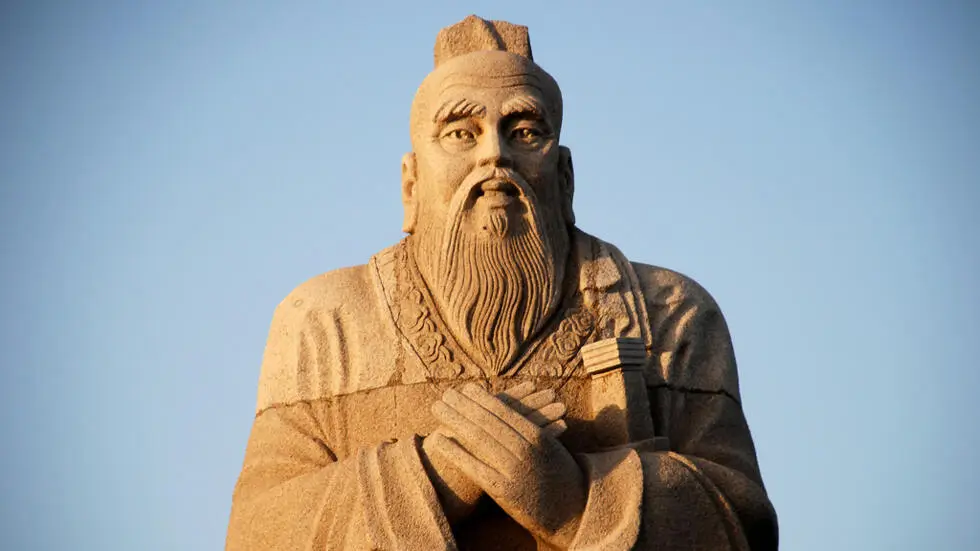
Confucius, a great Chinese philosopher and teacher, lived from 551 BC to 479 BC, is considered one of the greatest figures in the intellectual and cultural history of China and the world. He founded the philosophy of Confucianism, which is based on ethics, wisdom, social relations, and good governance. His thought had a profound impact on Chinese civilization and East Asian countries.
Early life and early life
Childhood and family:
- Confucius was born as Kung Fu Tzu in Chufu City, Shandong Province. His father was a high-ranking soldier but died when Confucius was a young child, bringing him up in humble circumstances.
- Despite poverty, he was well educated and from a young age showed a keen interest in learning and philosophy.
Working Life:
- He began his career as a junior civil servant, but soon realized that reforming society required teaching leaders and individuals the principles of ethics and wisdom.
Getting around and education:
- He spent years touring the kingdoms of China advising rulers, but was not fully successful in implementing his ideas politically. After that, he focused on education, attracting many students who contributed to the dissemination of his philosophy.
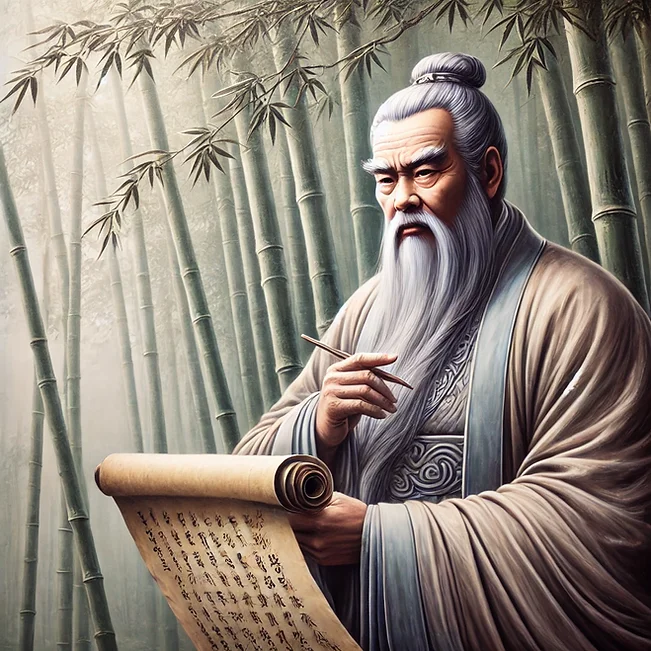
Philosophy and ideas
1. Personal ethics:
- Confucius considered that morality begins with the individual. Focus on self-development by adhering to values such as honesty, sincerity, and humility.
2. Social relations:
- He stressed the importance of structured social relationships, such as the governor’s relationship with the parish, father to children, and friends to each other.
- He introduced the concept of “virtue” (Ren), which is man’s love for others and concern for their interest.
3. Wise leadership:
- He called on rulers to set a good example for their people. He said, “A virtuous ruler makes virtue shine as the sun rises.”
4. Education:
- He saw education as the means to achieve human perfection. He believed that everyone deserves an education regardless of their social status.
5. Law and customs:
- He advocated a rule based on morals and customs rather than strict laws. “If people rule only by laws, they will fear punishment without being ashamed of their mistakes,” he said.
Ethics and values
1. Humility:
- Confucius was humble in his dealings with others, and emphasized the importance of humility as an essential quality of man.
2. Sincerity:
- He saw that sincerity in relationships and work is the basis of trust between people.
3. Mercy:
- He advocated compassion and concern for others, especially in social relationships.
4. Love of knowledge:
- He said, “He who knows that he does not know is a wise man.”

Highlights and impact
1. “The Analects”:
- A collection of sayings and teachings transmitted by his students. They are a major source for understanding his philosophy.
2. Community reform:
- He tried to reform Chinese society by teaching rulers the principles of morality and wise politics.
3. Cultural influence:
- Confucianism became the cultural basis of China and East Asian countries, such as Japan, Korea, and Vietnam.
4. Educational Legacy:
- He established an educational system focused on human values, earning him the nickname “First Teacher”.
Impact and legacy
1. In China:
- The teachings of Confucius became the basis of China’s educational and political system for many centuries.
2. At the global level:
- His philosophy influenced human thought, and was studied in Western philosophy.
3. In human relations:
- He provided a model for organizing social and political relations on the basis of morality.
Death
- Confucius died in 479 BC in his hometown. Although he did not achieve much political success in his lifetime, his ideas became the bedrock of Chinese culture after his death.
The bottom line
Confucius was a great philosopher and teacher, who devoted his life to spreading wisdom and morality. His philosophy calls for self-improvement, building social relationships based on respect, and achieving a peaceful and virtuous society. His intellectual and cultural legacy is still fresh and is an inspiration to individuals and communities around the world.